Appraiser on the Environment: The Case of Inner Niger Delta

Real estate practitioner should also be concern with the environment. As my contribution to the campaign in preserving the Inner Niger Delta River in Mali. I am sharing the summary of my paper submitted to the United Nation Environment Programme (UNEP) on how to augment the present effort on Ecosystem-based Adaptation (EbA) in Inner Niger Delta River.

Ecosystem Based Adaptation

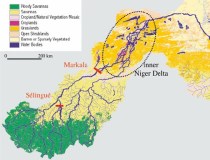
The Inner Niger Delta in Mali is a 3,000,000 hectare wetland consisting of flood plains, lakes, river branches and small pockets of flood forest. It is part of the 4.200 kilometres Niger river catchment, which flows through 10 countries before discharging in the Atlantic Ocean. It is also classified as a Ramsar site in 2004, for its extraordinary importance having a large range of water dependent plant and animal species.

The Inner Niger Delta is vulnerable to climate change, deforestation, flooding and loss of livelihood of fishermen, farmers and cattlers.

The integration of Ecosystem-based Adaptation and Ecosystem-based Disaster and Risk Reduction integration in Inner Niger Delta will bring more benefits to the people and the environment. Integrated approach of structural and non-structural projects will help restore the forest and prevent flooding and brings livelihood of the people. Furthermore, ecosystem based adaptation is more beneficial being a cost-effective measure and more effective.

There are activities currently done in the river but other measures should also be adopted like reforestation programs, construction of natural channels and water reservoir, experimentation of other suitable farming methods and more.

Reforestation will raise the water level and will help maintain the river flow. Regeneration of the tree cover will not only raise the water level of the water but this will also another source of livelihood for the people and will greatly help in preserving different flora and fauna habitat.

To prevent flooding and control rivers during heavy rains there should be natural channels and water reservoirs to be constructed.These structures could re-channel the waters to the reservoir and be absorb by the soil naturally.

Non-structural measures includes reforestation of riparian areas and strengthening of organization framework for disaster management. These projects and land restoration initiatives increases soil structure and thereby improved the watersheds ability to hold and store water.

In the agricultural village, the effect of climate change are the drying up of the soil vegetation and irrigation system . There should be innovation and experimentation with traditional farming methods and agroforestry techniques. Depending on the soil characteristics, with the above measures, people can have a better crop yields, regeneration of tree cover, as well as other additional economic and environmental benefits.

Coordination among the stakeholders and users of the river should be implemented.There should be coordination among the population in upstream and downstream part of the river with regards to the use of the river. Creation of water governance bodies in downstream and upstream and a bigger bodies that coordinates all the stakeholders. This body will conduct mapping of the entire area and pinpointing the possible or potential area that are prone to disaster and hazards.At the same time, conduct training on preparedness on different hazard events.

These measures needs people support and to achieve it, there should be a massive information and educational campaigns and conduct of trainings among the populace.

Maintenance of water flows in Inner Niger Delta is a major campaign to help preserve our wetlands. We should throw our support and give our next generation a chance to benefit the beauty of nature and the ecosystem.

I hope this was interesting to you. Thanks for being here.

SAMSUNG CSC

5367690406_067e7028af_b

index_img04_l

Appraisal 101: How an appraisal is done

It has been a normal scene for prospective client and practitioners to ask an appraiser for the value of a certain property. Some people also thought that after site inspection, an appraiser can render a value opinion already. So, there is a need to answer questions on how an appraisal is done? And why it is important to follow the process?

Appraisal may seem as a simple and fast process. An appraiser shows up at a property for a short time with a camera and tape measure and that’s it. However, the property inspections are only a part of a big process. A typical appraisal report requires 12 to 13 combined hours by appraiser and staff to complete.

Ordering an Appraisal
The process usually begins when a client call or visit the appraiser to order an appraisal. In the telephone or in-person conversation, the appraiser will asks data of the property such as title, building plan, tax declaration, as well as preliminary information of the client, and agree on the scope of work and professional fee. The most important is scheduling of the site inspection.

Identifying the Property
In preparation for the site inspection, the appraiser will study the documents provided by the client focusing on the location, shape and size of the lot, design of the house and decide on what valuation approach that he will use. Additional research will be done in different government offices for the identification of the property.

The Site Visit
Then the appraiser conducts a careful physical inspection of the property and the neighborhood. Take photographs and verify area measurements. Don’t worry about the kids, toys or household disorder. The appraiser is looking at the structure, condition and features of your home.

The appraiser will also roam the neighborhood to observe, estimate the distance between known landmarks in the area. Also, to look for any factors and characteristics that may affect the value of the property, and searching for comparable properties or “comps”. In the language of appraisal, ‘comps’ are sales and listings available in the market.

Pulling It All Together
Next, the appraiser performs in depth analysis of all of the available data. Returning to office is crucial part of the appraisal process. The appraiser will gather all the information about the properties and the financial aspects. Make phone calls to agents, government offices and other parties involved in the transactions to confirm observations or to gather more information. Examine the title and tax declaration for any encumbrance, annotation and non-compliance with the law. Often, property information from several sources is in conflict and it is the appraiser’s task to determine the true state of affairs by means of research, experience and good judgment.

Guided by the principles of appraisal, he will analyze the neighborhood, market, zoning, the predominant use of the area and determine the highest and best use of the property, as vacant and as improved.

In using market data approach, the appraiser will select at least three comps, but generally four or five are necessary to support the basis for the final appraised value. The appraiser makes adjustments to reflect differences in comp properties. Upgrades like painting, chandelier, air conditioners, recent redecorating, or home improvements may add value to a property.

There are other approaches or methods in valuing properties. Every approach is made to substantiate the appraiser’s opinion of market value.

Finalization of a Report
The last part is the preparation and printing of a detailed report, outlining the value of the property appraised and the approaches to value with several addenda including copies of title and neighborhood maps as well as photographs of the property.

The completed appraisal is packaged and transmitted to the client—the property owner, lawyer or company representative who ordered the appraisal.

Thus, appraisal is not a mere “opinion of value”, it follow process and guidelines set by authorities and international standards. Following thoughtful and thorough procedures will provide a complete and credible appraisal.

Bagging an appraisal contract

A big corporation contacted me for an appraisal work. They asked for my credentials and if I’m a bank accredited appraiser. Previously, they hired a research group to do the valuation, but not satisfied with the result.

I commended their effort to look for a licensed and experienced appraiser, and gave them my credentials. I explained to them the difference between an experienced bank appraiser and non-bank appraiser.

It pays to be able to discern between the two.

What are the difference?

Non-bank appraisal is a market niche, often best suited for appraisers who think outside the box. These assignments include appraisal reports performed for situations such as pre-listing, financial reporting, divorce settlement, other litigation related cases, and government agencies appraisal needs. Intended users need to find the most qualified and experienced appraisers. Well-vetted experts are most applicable when testimony is a possibility or when looking at unique properties.

Take lawyers, for example; They need someone who can report not only well enough to be reliable but also defensible in court and a communicator. It takes a good professional to write a report, but an even better one to be effective to withstand in court trials and argumentation with fellow commissioners and lawyers. An appraiser should know how to convince the commissioners in court of his valuation, and come up with a recommendation, thereby hastening the trial process.He must also be able to communicate complex valuation theory to assessors, lawyers and judge who may have no deeper understanding of valuation processes, approaches and adjustments. In other words, the appraiser must become an effective teacher in addition to being a good report writer.

Meanwhile, many appraisers who work primarily with banks are confine within company scope of work. Banks often require appraisers to utilize comparable sales within a “price range” of an area, and not to exceed company guidelines when adjusting comparable sales and in using valuation approaches.

Clients and user of appraisal work should tread very carefully when selecting appraisers. Choosing an appraiser with limited experience could result in less than optimal results.

After the discussion with their top management, they decided to get my service. Another big corporation in my client list.

Challenges In Appraising Warehouse Properties

Appraisal of a warehouse can appear straightforward compared to other appraisal assignments. A warehouse appraisal involves comparing a building that is primarily an open shell to similar buildings. Some appraisers tend to assume that one “box” is pretty much the same as another. However, a number of warehouse characteristics can present challenges during the valuation process.

Some appraisers end in using Cost Approach method as a generic method in appraising buildings. But there are several critical differences appraisers need to keep in mind. First, knowing the remaining economic life of a structure is a big factor in determining what method should be used. Appraising old structures using the cost approach method may generate an incorrect result. Income approach is the reasonable method in this situation. Second, the importance of solving the question of the highest and best use of the property- as vacant and as improved, gains ground when the subject property is old and located in a neighborhood where other best use is possible and more feasible.

In appraising these warehouses using Income Approach, it is essential to carefully consider the following factors in selecting comparables:

• Excess land
• Truss height
• Percent of office space
• Loading facilities
• Truck maneuvering distance
• Floor thickness/loading capacity
• Power service
• Land-to-building ratio
• Size relative to typical building size

The most important, location-related factors can differentiate warehouses located within the same community. The value of a warehouse facility is tied to the ability to move goods efficiently in and out of the warehouse. Any inefficiency reduces profitability.

In a challenging profession, an appraiser should think “out of the box” in looking methods that will result in a reliable and unbiased opinion of value.

Appraising Appraisals

As 2014 come to a close, let me share some highlight of major career accomplishments in appraisal.

It was a great leap in my appraisal career. I served clients from different stratum of our society-property owners, lawyers, brokers, accountants, ambassador, company, cooperatives and foreign individuals. More and more assignments means more places visited. It was a year of valuable experiences.

After my stint with Intech Property Appraisal as its Managing Partner, series of assignments and appraisal orders came. My biggest clients were the CFI Multipurpose Cooperative and a subdivision developer. I appraised its properties ranging from vacant lot, residential, and commercial buildings and institutional. The most challenging assignment was a one-hectare residential lot. It was challenging because it has a variety of problems on its title, physical characteristics, occupants and expropriated portion. In addition to the most commonly used methods in appraisal (market data, cost and income approach) I have to use subdivision development method in appraising the said property to draw closer out with the most reliable and accurate value .

In these assignments, I learn a lot of lesson in practicing appraisal. My foundation as a researcher, as an economist and being a real estate broker helps a lot. In every appraisal assignment, I always bear in mind that I should come out with an unbiased and justifiable opinion of value.

The most challenging assignment was to be appointed by a regional trial court as member of the Commission that will study and report the fair market value of a property on trial. It is an assignment where an appraiser has to face the grilling of the judge, lawyers, assessors and other parties. It needs courage draws from experience and technical capability.

Appraisal assignments also mean travel to different places. I visited places and seen faces in different part of the country. Beautiful beaches of Camotes and Bohol, picturesque mountains in Negros and Agusan, scenic islands in Iloilo, native delicacy in Bayawan City- the baye-baye ( I keep looking for laki-laki), Marang in Cagayan de Oro, Binagol in Leyte and more.

It was a great year of raising the level of professional capabilities and experience.

Photos from the Field: The Church in Palo

10534071_743874659004890_5581211383210843303_n

In the course of my appraisal work, I visited places like Palo Church.

Palo Church is a historical landmark in Palo which was built in 1596 by Fr. Alonso de Humanes, a Jesuit who came to the place when the sitio had only two houses, who spread the gospel of Christ, baptized natives, taught the children to read and write, pray the rosary, sing church hymns or play the flute.

Experience in Appraisal Matters

In real estate appraisal practice, there are challenges that an appraiser should strive to overcome and characteristics needed to acquire.

Valuing properties requires good judgment. An appraiser can use different methods in valuation, outlined in the international valuation standards. There are different approaches like market data, cost or income approach in valuation. He can also use other approaches like subdivision development approach, residual approach and many more.

But in choosing an appropriate valuation methodology is another thing. The appraiser considers not only the purpose of the appraisal laid out by its client, but the most important, the property’s highest and best use. This judgment emanates from the appraiser’s experience.

Good judgment is also required in analyzing comparables or “comps”. The appraiser identifies the “terms” of the sale – was it an arm’s length transaction in which both parties were equally motivated? Was it a relocation transaction where an owner was attempting to shorten the time on the market to find a buyer? Regardless, no one can tell the appraiser on what comparables to use. It is based on the appraiser’s judgment.

In whatever situation, an experienced appraiser has an edge. He always strive to look for other appraisal methodology and will cull more data on comparables with the sole purpose of rendering an opinion that will truly represents the true market value of the property.

Thus in real estate appraisal practice, experience and good judgment truly matters.

Successful Real Estate Consultant Review

parcs cebu (2)Philippine Association of Realty Consultants and Specialist (PARCS) successfully completed its 120 Hour Comprehensive Seminar and Review for Consultants. The seminar was conducted in preparation for the upcoming Philippine Regulation Commission Real Estate Consultant Board Examination scheduled on December 3 -4, 2014.

The seminar and review gives the participants an in-depth knowledge on consultancy, due diligence, land administration, risk and rate of return, capital budgeting, market analysis and the conduct of feasibility study.

“It gave me a profound and broader view of my real estate profession”, said Gus Agosto, one of the participant. Currently, he is a practicing real estate appraiser in Cebu and other provinces in Visayas and Mindanao. “Being an economic researcher for a quite of time, the seminar refreshes my craft and add lot of knowledge plus the practical experiences shared by the participants who are seasoned real estate practitioners themselves..”

The seminar and review participants were determined to pass the board exam. The lecturer of the review include real estate icon Tom Academia, seasoned appraiser and consultant Oscar Labrador and Alexander Lumarda.

Highest and Best Use

It Is important for a real estate practitioner to know not only the current market value of the land they are marketing or dealing with. It is also equally important to determine its highest and best use. The highest and best use of a specific parcel of land is not determined through subjective analysis by a property owner, developer, real estate agent, or appraiser; but rather, it is a use shaped by the competitive forces within the market where the property is located.

In a real sense, the definition of highest and best use encompasses four tests. It is …
• the most probable use of land or improved property that is legally possible, physically possible, financially feasible (and appropriately supportable) from the market, and which results in maximum profitability.

An attempted analysis of highest and best use involves two considerations: [1] the most likely and profitable use of the site “as if vacant” under the requirements set forth above and, [2] if a property is “already improved”, it is the use that should be made of the property to maximize value for non-income producing properties or, maximize net operating income on a long range basis for investment properties. In cases where capital expenditure is necessary to renovate or improve an income producing property, these costs must provide a sufficient rate of return (to the owner) for the total amount invested in the site and building improvements.

Basic highest and best use assumptions include:

• If the property is located in an area “zoned” for commercial use, the maximum productivity of the land as though vacant will likely be based on commercial use. If, however, the competitive level of demand is greater for say, residential or multi-family use, then the highest and best use of the property as improved would be for residential use. If market preference conflicts with zoning (and consequently violates the legal permissibility test), a developer will consider if there is sufficient profit incentive to justify the added legal costs, extended time frame, and potential neighborhood opposition before obtaining a zoning change and developing the site.

• As long as the value of the property “as improved” is greater than the value of the site as “if vacant”, the highest and best use is usually the “improved” property. Once the value of the vacant land exceeds the value of the improved property (including demolition costs), highest and best use will usually dictate that improvements be demolished.

The following are examples of narratives from appraisal reports outlining the primary criteria in estimating highest and best use…

LEGALLY PERMISSIBLE USE
• The present zoning classification of Highway Business encourages the use of the subject property for retail —clearly a definition consonant with the present use of the subject property and surrounding properties. Environmental conditions and urban infrastructure are adequate to support the present use and it’s current use appears to legally conform with the current zoning ordinance.

• The present lack of zoning would allow for a wide variety of residential and/or commercial/industrial uses. As vacant, the proposed improvements would be legally permissible subject to the same land use regulations that apply to all property types such as erosion control measures, environmental safety, watershed implementation, and government agencies compliance. There were no apparent adverse easements or encroachments which would adversely impact subject and there are no known private deed restrictions which would prohibit full utilization of the site.

• Lack of zoning in the county and no known restrictions concerning the property would permit virtually any use. Even though new zoning regulations may be imminent in the near future, it is probable that current use patterns (retail and offices – a supermarket, insurance office, restaurant, bank branch, convenience store, and so forth) would entail similar zoning.

PHYSICALLY POSSIBLE USE

• The vacant site is near level, highly visible from the highway, and is considered suitable for “low rise” improvements. Although no soil report has been reviewed, it is the appraiser’s opinion that the soil has sufficient load bearing capacity to support construction. All public utilities are available at the street and capacity for utilities does not appear to be a limitation.

• If vacant, the site appears to be of sufficient size to accommodate many types of commercial buildings and parking requirements for those buildings. Likely uses would include office or retail. As improved, the existing retail building adapts well, still has significant remaining economic life, and therefore should not be demolished. On the other hand, the roof should be replaced and exterior painted to sustain the condition of the building.

• The subject site is mildly sloping at its most visible/usable portion. Improvements are possible but construction would be limited by the size, shape, and topography of the site as well as the ability of the vacant site to accommodate on-site well and septic placements. In January, 2002 hopes for a new sewer line to the area were diminished after local officials decided against building a sewer line through the valley. Instead, they elected to spend Php 1,500,000 for a small treatment sewage plant. Further, the recent construction of a nearby Food Lion Center in this rural location required construction of an on-site waste treatment facility that cost in excess of Php 500,000 and required the acquisition of four additional acres. These examples, and the prices paid for raw land, are reflective of the difficulty, additional development risk, and increased costs necessary to develop marginal sites for commercial use.

FEASIBLE AND MARKETABLE USES

• The current market value of the subject is driven by its current use. A general shortage of developable sites in this mountainous region has sustained land prices, encouraged development of marginal sites, and demolition of those buildings that no longer produce economic return. Case in point, rapid development along the Highway corridor. The advent of growth along the corridor has driven prices out of reach for most uses except those catering to brand name retailers, fast food/restaurant chains, and/or strip centers. Outdated buildings are being acquired and demolished to make way for more modern structures that can produce greater economic return.

• For the subject, it is fairly new and the cost to demolish would appear to make this property too costly as raw land. The location has high traffic volume – a requirement for retail use, but it has only marginal visibility (due to it’s elevation above the highway) and limited access – also requirements for retail. It’s present use as retail is constrained by the following: a lack of road frontage, excessive above-the-road elevation, small site size, and poor access – factors that would likely discourage brand retailers from acquiring the site if vacant. Although access may be cured at some cost, the elevation of the site, limited visibility, and blocked signage cannot be financially overcome. Market data suggests office and “secondary” retail pricing are competitive. Given these limitations, probable uses would include: [1] the continued retail use or, conversion to office use if conversion costs can be sufficiently amortized.

• The property is presently improved with a one-story 2000 sq. m. branch bank facility. The structure is reasonably well designed and in good condition however, it does not have the modern appearance of more recently constructed facilities. On the other hand, there are no other branch bank facilities in this section of the City and the present use as a branch bank is felt to command a competitive advantage due to the lack of competition of other banks in the market. Further, it is the appraiser’s opinion that use of this location for this purpose may command a premium in the market.

Appraisal add credibility to listing price

Pricing a listing is one of the hardest— and perhaps most important — tasks in real estate. Sellers can get it wrong in either direction: If the asking price is too low, the sellers might end up leaving money on the table; if it’s too high, they won’t tap into the right target group, will lose a lot of time and may then end up selling for even less.

Can you rely on a “mata-mata” or guessing? The answer is “NO”. You cannot. Relying on a guess or the word of a non-certified person is inaccurate and will not estimate the true market value of a property. However, with the educated and experienced real estate appraiser, who apply the methodology of appraisal and employ the ethical guidelines for determining values, can be relied on as unbiased and independent. Appraisal will add credibility to your pricing.

In addition, appraisal analysis the market to determine the highest and best use of the property, thereby come up with a value that is credible and reliable.

Buyers, particularly foreign investor and businessmen, tend to buy property with confidence if it was appraised by a third party.

In our real estate profession where trust is the most important aspect, a real estate professional-broker and agents, should encourage in acquiring the services of a licensed appraiser. It is more beneficial to the clients having it appraised and help in fostering our relationship with them. In the long run, the confidence of the public on real estate practitioners.

Add credibility to your listing price, get the services of a real estate appraiser.