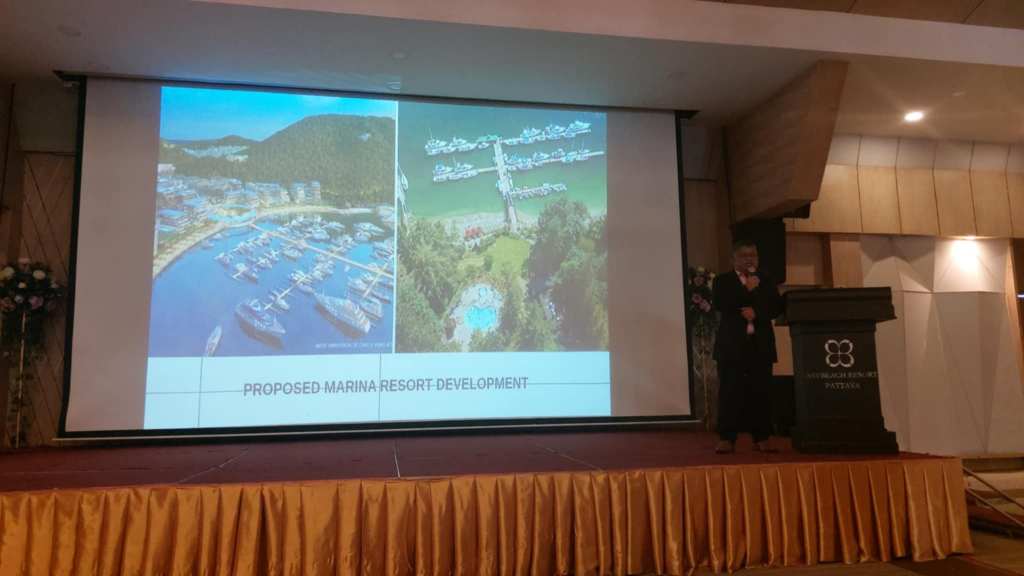
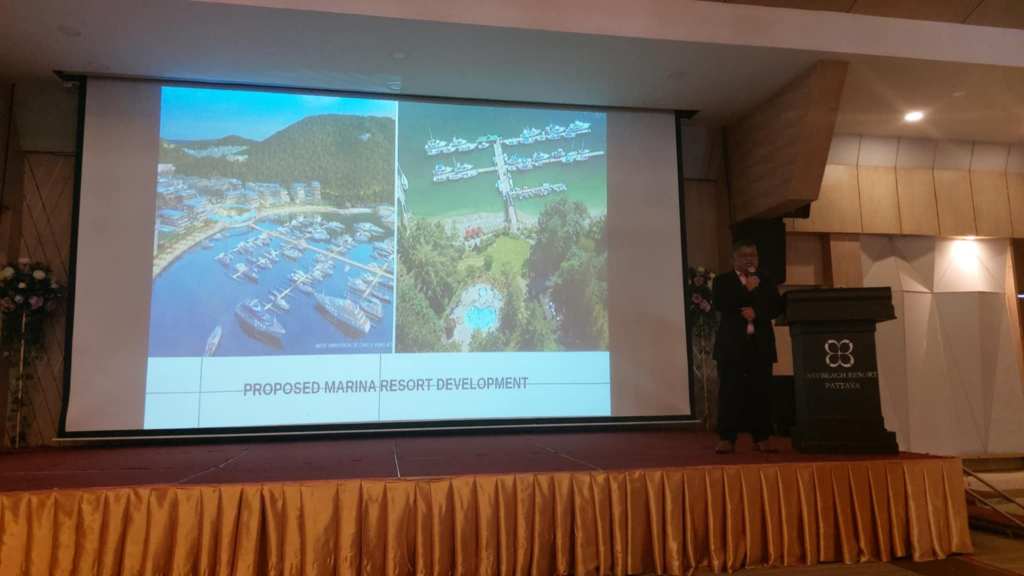
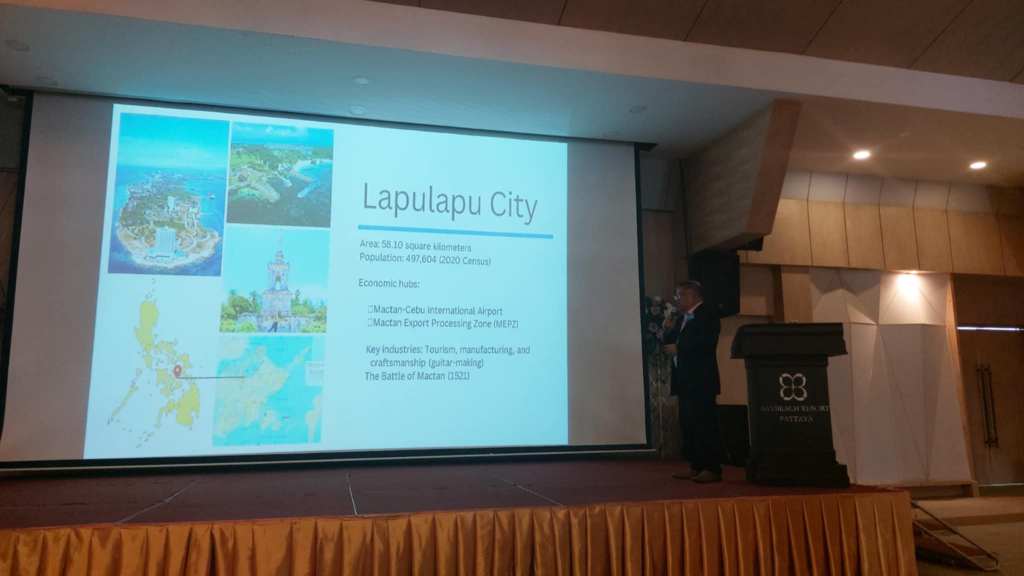
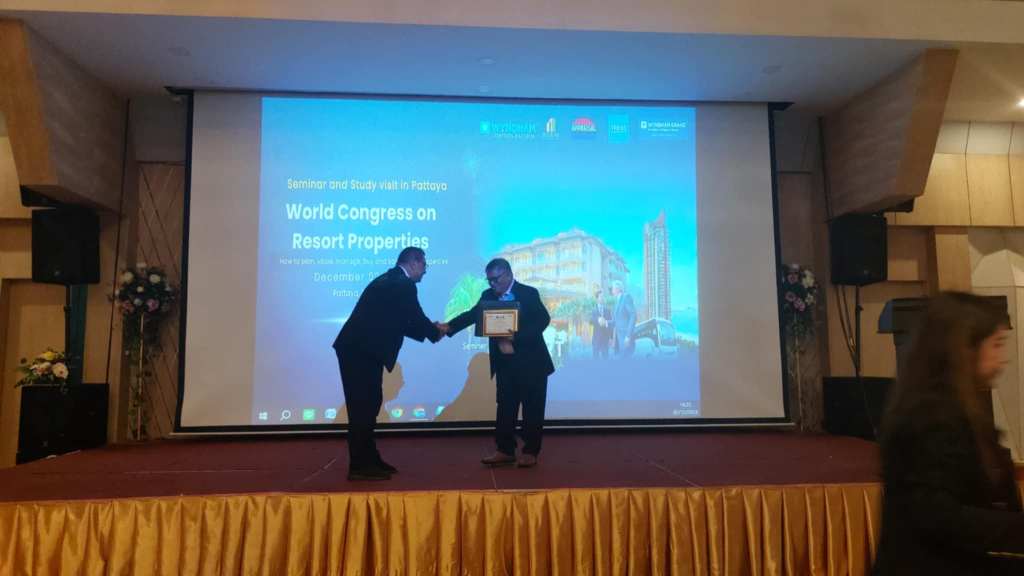
Consultant Gus Agosto delivered an insightful presentation at the prestigious World Congress of Resort Properties held in Pattaya, Thailand. His talk focused on the integration of valuation and planning practices in the context of Lapulapu City, Philippines—a city renowned for its vibrant tourism and resort industry.
In his speech, Agosto emphasized the importance of leveraging advanced valuation methodologies to complement sustainable planning efforts. He remarked, “The exploitation of various methodologies in valuation, coupled with the principles of highest and best use and feasibility analysis, can yield more reliable estimations. These, in turn, align closely with the goals of sustainable and responsible urban planning.” His insights underscored the critical role of integrating economic, environmental, and social considerations in developing resort-based real estate projects.
The Congress featured distinguished speakers from various countries, including Nepal, India, Indonesia, Malaysia, Vietnam, Thailand, the Philippines, Brunei, the Maldives, and others. It served as an invaluable platform for global participants to exchange experiences and insights into real estate practices focused on resorts and hotels.
Agosto highlighted how both the indoor seminars and on-site study visits provided participants with hands-on learning opportunities. He noted that these activities offered a deeper understanding of innovative approaches and strategies in real estate development, which would significantly enhance the professional practices of attendees.
Pattaya, Thailand, was a fitting venue for the event, being globally recognized as a premier resort city. Its reputation as a hub of hospitality and tourism added a dynamic layer to the Congress, enriching discussions and case studies with real-world examples of successful resort property development. Agosto concluded that the knowledge shared at the event would undoubtedly elevate the standards of real estate practice among the participants, fostering innovation and collaboration in the global resort property sector.
The world of resort properties is rapidly evolving, and industry leaders from across Southeast Asia will come together to share insights and strategies at the World Congress on Resort Properties, happening from December 1-3, 2024, in Pattaya, Thailand. Among the distinguished speakers is Consultant Gus Agosto, a renowned expert in real estate valuation and development, who will contribute his expertise alongside speakers from Malaysia, Vietnam, Maldives, Brunei, Cambodia, Laos, India, the Philippines, USA and Thailand.
The World Congress on Resort Properties will serve as a pivotal platform to explore the dynamic sector of resort real estate, which encompasses seaside resorts, mountain retreats, rural-style accommodations, pool villas, hotels, and wellness-focused developments. As the demand for unique and luxurious vacation experiences continues to rise globally, resort properties are increasingly becoming a prime investment choice.
Topics That Matter
With its theme focusing on “How to Plan, Value, Manage, Buy, and Sell Resort Properties,” the congress aims to provide actionable insights to investors, developers, real estate professionals, and industry stakeholders. Attendees can expect to learn about:
Strategic Planning: Understanding market trends and consumer preferences to create sustainable and profitable resort developments.
Valuation Techniques: Key factors influencing the market value of resort properties and tools for accurate valuation.
Effective Management: Strategies for managing operations while enhancing guest experiences.
Investment Opportunities: Insights into buying and selling resort properties, with a focus on long-term profitability.
As the global tourism industry continues to recover and thrive, resort properties are playing an increasingly significant role in boosting economies and creating employment opportunities. This congress will foster dialogue on how to address emerging challenges, seize new opportunities, and embrace innovation in the sector.
This invitation to the World Congress is a testament to Consultant Gus Agosto’s growing influence in the real estate industry, particularly in hotel and resort valuation and consulting. Just a few months ago, Gus was invited to speak at the prestigious FIABCI Thailand Congress 2024 Asia Pacific Real Estate Convention & Property Prix d’Excellence Awards held on August 30-31, 2024, at the Amari Bangkok Hotel. His presentation at that event focused on key trends shaping real estate markets across the Asia-Pacific region, further solidifying his reputation as a sought-after speaker and consultant.
As an expert in hotel and resort development, Consultant Gus Agosto conducted a detailed inspection of three islands in Northern Samar. His evaluation focused on identifying the potential of these islands to host sustainable and marketable hotel and resort projects, aligning with the growing demand for eco-tourism and luxury getaways in the Philippines.
Gus Agosto’s expertise in hotel and resort development uniquely positioned him to assess the islands’ suitability for projects that cater to high-end tourism, sustainable lodging, and immersive guest experiences. His approach integrates:
Market Viability: Identifying opportunities to attract domestic and international tourists.
Sustainability Principles: Designing eco-friendly resorts that protect natural resources while providing world-class amenities.
Operational Feasibility: Evaluating logistical requirements such as accessibility, infrastructure needs, and local workforce engagement.
Gus Agosto’s specialization in hotel and resort development allowed him to identify the three islands as prime locations for sustainable and innovative projects. By leveraging their natural beauty and focusing on eco-friendly development, these islands have the potential to become key players in the Philippines’ growing tourism sector, fostering economic growth while protecting the environment.
Public trust and professional integrity are safeguarded through strict regulations governing the practice of various professions. These laws not only define the scope of each profession but also impose penalties on individuals who operate beyond their authorized expertise or practice without proper credentials. Such provisions ensure that only qualified professionals render services, protecting the public from unqualified practitioners.
For real estate practitioners, the Real Estate Service Act (RA 9646) serves as the primary regulatory framework. Individuals who practice real estate services without a valid license or perform tasks outside their professional scope face severe penalties. These include fines ranging from ₱100,000 to ₱5,000,000 and/or imprisonment of two to four years. This law underscores the importance of licensing in real estate services, ensuring that only accredited professionals appraise properties and guide clients through transactions.
In the field of agriculture and engineering, the Agricultural and Biosystems Engineering Act (RA 10915) regulates the work of agricultural and biosystems engineers (ABEs). Unauthorized practice under this law can lead to penalties of ₱100,000 to ₱500,000 or imprisonment of six months to five years, or both. This highlights the critical role ABEs play in ensuring the safe and efficient development of agricultural systems and infrastructure.
Similarly, the Philippine Mechanical Engineering Act (RA 8495) protects the mechanical engineering profession from unauthorized practice. Violators face fines between ₱50,000 and ₱200,000 or imprisonment of six months to six years, or both. Mechanical engineers handle critical tasks such as designing industrial machinery and evaluating technical systems, which require specialized skills.
For architects, the Architecture Act (RA 9266) prescribes fines ranging from ₱100,000 to ₱5,000,000 or imprisonment of six months to six years for practicing without proper licensure or exceeding the defined scope. The same is true for electrical engineers under the Electrical Engineering Law (RA 7920), which penalizes violations with fines of ₱10,000 to ₱50,000 or imprisonment of six months to five years or both.
These penal provisions serve as a warning to professionals and non-professionals alike. Practicing outside the bounds of expertise and licensure can have serious legal consequences. The overlapping and specialized nature of modern industries—such as real estate, engineering, and agriculture—demands that professionals adhere strictly to their defined roles. Collaboration among experts in their respective fields ensures comprehensive and credible outcomes without compromising public welfare.
By staying within the bounds of their profession, licensed practitioners not only avoid hefty fines and imprisonment but also contribute to upholding the credibility and standards of their industry. For the public, these laws provide assurance that they are engaging with qualified professionals, fostering trust and confidence in professional services across sectors.
Valuation is a cornerstone of informed decision-making across industries, including real estate, agriculture, manufacturing, and engineering. It involves assessing value for various purposes, such as sales, taxation, insurance, and investment. Given its complexity, valuation has emerged as a multidisciplinary practice, bringing together professionals from diverse fields to ensure accuracy, reliability, and comprehensive results.
In the Philippines, various laws regulate professionals involved in valuation, ensuring that each operates within their defined scope of expertise. Real estate appraisers are governed by Republic Act No. 9646, also known as the Real Estate Service Act of the Philippines. This law establishes the standards for the licensure, practice, and professional conduct of real estate appraisers, granting them the authority to assess and determine the value of real estate properties, including land, buildings, and improvements.
For agricultural and biosystems engineers (ABEs), their practice is regulated by Republic Act No. 10915, the Philippine Agricultural and Biosystems Engineering Act of 2016. This law authorizes ABEs to perform valuations of agricultural and biosystems machinery, equipment, structures, and facilities, as well as agricultural engineering projects such as irrigation systems and farm infrastructure. Joint Resolution No. 1, Series of 2022, further clarifies the complementary roles between ABEs and real estate appraisers, stating that ABEs’ valuation reports for agricultural assets can serve as references for real estate appraisers when valuing agricultural properties.
Mechanical engineers, on the other hand, are governed by Republic Act No. 8495, known as the Philippine Mechanical Engineering Act of 1998. This law allows mechanical engineers to engage in the valuation of mechanical systems and equipment, such as HVAC systems, boilers, power plants, and other industrial machinery. Their valuations typically focus on the technical and operational aspects of machinery, assessing factors like depreciation, replacement costs, and operational efficiency, particularly in industrial or commercial properties. Similarly, other specialized professionals, such as electrical engineers regulated under Republic Act No. 7920 (The Philippine Electrical Engineering Law), contribute to the valuation process, particularly for properties with complex electrical systems. Architects, regulated by Republic Act No. 9266 (The Architecture Act of 2004), may also be involved in valuing buildings and structures, focusing on the design and construction aspects of real estate.
Each of these laws ensures that professionals work within their areas of expertise, providing accurate and legally compliant valuations. While real estate appraisers focus on the overall property value, agricultural and biosystems engineers and mechanical engineers bring specialized knowledge to appraise agricultural systems, machinery, and industrial equipment. Their collaborative roles, as outlined in Joint Resolution No. 1, Series of 2022, ensure that properties with specialized components, such as agro-industrial estates, are valued comprehensively and accurately. This multidisciplinary approach, guided by their respective laws, guarantees a thorough and credible valuation process that benefits all stakeholders involved.
Real estate appraisers are at the core of property valuation, focusing on land, buildings, and other real estate. They assess market conditions, zoning laws, and property improvements to provide a comprehensive valuation report. Their work is primarily guided by RA 9646 in the Philippines. However, in properties with specialized components, such as agricultural systems or mechanical infrastructure, real estate appraisers often rely on the input of other professionals. Agricultural and biosystems engineers, for example, are authorized under RA 10915 to assess agricultural assets like irrigation systems, silos, and other farm-related infrastructure. Their specialized knowledge is particularly crucial when valuing agricultural properties or agro-industrial estates. Similarly, mechanical engineers, as outlined in the Philippine Mechanical Engineering Act, can assess the value of mechanical equipment and machinery, such as HVAC systems, boilers, and industrial machines. These engineers evaluate factors like depreciation, operational value, and replacement costs, which are important for properties with significant mechanical infrastructure.
The interplay between these professions ensures a comprehensive approach to valuation. For example, in industrial properties, mechanical engineers evaluate the machinery and systems, while real estate appraisers integrate these technical valuations into the overall property value. In agricultural settings, ABEs assess farming equipment and infrastructure, and real estate appraisers consider these factors alongside land and property values to determine the total worth. The collaboration of these professionals leads to more accurate and thorough appraisals, addressing both the real estate and specialized components of a property.
This multidisciplinary approach to valuation offers numerous benefits. It ensures accuracy, as each expert contributes their specialized knowledge to different aspects of the property. It also provides a comprehensive valuation, incorporating everything from land value to the worth of machinery or agricultural systems. Moreover, it guarantees regulatory compliance, as each professional operates within their legal scope—real estate appraisers under RA 9646, and ABEs and mechanical engineers under their respective laws. Finally, it fosters stakeholder confidence, as the valuation reports produced are detailed, reliable, and credible, providing property owners, investors, and other stakeholders with the information they need to make informed decisions.
In the real estate industry, professionals often wear multiple hats to meet the diverse needs of clients. Brokers facilitate the buying, selling, or leasing of properties and earn commissions based on the transaction’s value. Appraisers, on the other hand, provide impartial, accurate property valuations that are essential for informed decision-making by buyers, sellers, lenders, and investors. Although these roles complement each other, combining them under a single practitioner can create significant conflicts of interest that undermine the integrity of both professions.
The core issue lies in the divergent motivations of brokers and appraisers. Brokers are incentivized by the commission, which is tied to the value of the property and the success of the transaction. This financial motivation can lead brokers to manipulate property valuations—either inflating the value to secure a sale or undervaluing a property to expedite the transaction. Such actions may benefit the broker but distort the true market value and could ultimately harm other stakeholders, such as lenders or buyers.
In contrast, appraisers are expected to provide unbiased, objective property valuations. Their work should be independent and based solely on the property’s characteristics, market conditions, and other relevant factors, without any external influences. When an individual engages in both brokering and appraising, it raises concerns about the integrity of the valuation and the possibility that the dual roles could influence the professional’s objectivity, judgment, and ethical decision-making. Their financial interest in closing the deal could lead to a questionable and potentially inflated or deflated property value.
A few weeks ago, a client requested our company to sign a non-disclosure agreement (NDA) to ensure the confidentiality of the information they would provide, we reassured them that confidentiality is a cornerstone of our professional practice. Not only do we strictly comply with the Data Privacy Act of the land, but we also adhere to the ethical principles outlined in the International Valuation Standards (IVS). These guiding frameworks collectively reinforce our commitment to safeguarding client information, maintaining impartiality, and upholding the highest standards of professional integrity.
As a company that handles sensitive and proprietary client information, we strictly comply with the Data Privacy Act. This legislation mandates the secure handling, processing, and storage of data to protect it from unauthorized access, misuse, or breaches. Our compliance ensures that every piece of information entrusted to us is treated with utmost care and responsibility.
Recognizing this inherent conflict of interest, the Real Estate Service Act (RESA) of the Philippines, which governs the practice of real estate services in the country, mandates the separation of the real estate broker and appraiser professions. RESA ensures that each profession operates independently, preserving the integrity of their respective roles. The law encourages individuals to specialize in either brokering or appraising, which safeguards both professional accountability and the quality of services provided to clients. By doing so, RESA helps maintain public trust and transparency in real estate transactions.
The separation of these professions also aligns with global best practices, such as those outlined in the International Valuation Standards (IVS). These standards emphasize the importance of ethics, integrity, and impartiality in valuation practices. By keeping brokering and appraising distinct, the real estate industry can better ensure that valuations remain objective and reliable, upholding the public interest and minimizing any potential conflicts of interest.
In today’s digital age, Automated Valuation Models (AVMs) are reshaping the property valuation landscape, providing swift and reliable property assessments. Powered by artificial intelligence (AI) and advanced data analysis, AVMs leverage sophisticated analytical tools to capture market complexities and support informed decision-making. As the real estate market becomes more dynamic, advanced tools like Vector Autoregression (VAR), Vector Error Correction Model (VECM), Principal Component Analysis (PCA), and Regression Analysis have become integral to refining AVM accuracy, allowing for precise valuations across diverse property types and locations.
AA+ Appraisal & Consultancy, a leader in real estate appraisal and consulting services, is committed to continuously applying and advancing technology in its analysis and client services. By incorporating these advanced tools, AA+ Appraisal & Consultancy enhances its ability to provide clients with precise, data-driven insights, addressing real-time and long-term market conditions with accuracy and expertise.
The Role of Advanced Analytical Tools in AVMs
AVMs utilize mathematical and statistical models to assess property values based on historical sales, market conditions, and macroeconomic factors. Advanced analytical tools now enhance these valuations by addressing real-time and long-term market shifts, key economic impacts, and local variations. For instance, VECM aids in analyzing how broader economic conditions influence housing prices, while PCA identifies primary factors influencing land values in urban areas like Cebu City. By incorporating these specialized tools, AA+ Appraisal & Consultancy’s AVMs provide nuanced insights that cater to different stakeholders—from investors to homeowners.
Key Analytical Tools Elevating AVM Precision
Vector Autoregression (VAR)Vector Autoregression (VAR) is a statistical model used to analyze time series data, making it ideal for short-term market predictions. In AVMs, VAR forecasts fluctuations based on interactions between variables, such as interest rates and inflation, which directly impact property prices. This allows AA+ Appraisal & Consultancy’s AVMs to capture short-term changes, providing users with up-to-date, responsive valuations. In volatile markets, where economic indicators shift rapidly, VAR enhances AVM adaptability, ensuring that valuations reflect current economic dynamics.
Vector Error Correction Model (VECM)The Vector Error Correction Model (VECM) is essential for analyzing data with long-term equilibrium relationships. By examining macroeconomic determinants, VECM can analyze how factors such as GDP, employment, and income levels influence housing prices over time. AA+ Appraisal & Consultancy applies VECM to assess both macroeconomic impacts on housing prices and the relationship between the real estate market and the stock market, offering insights into how these sectors interact within investment portfolios. For those assessing long-term investments in the housing sector, VECM enables AVMs to incorporate macroeconomic drivers, providing grounded, long-view property valuations aligned with broader economic cycles.
Principal Component Analysis (PCA)Principal Component Analysis (PCA) is a powerful dimensionality-reduction tool that isolates key variables driving property values. In densely populated regions, property values can be influenced by numerous factors, from access to transportation to neighborhood amenities. In Cebu City, AA+ Appraisal & Consultancy applies PCA to identify the main determinants of land value, allowing AVMs to focus on the most influential data points and deliver precise, region-specific valuations. In urban markets, PCA allows AVMs to focus on the most impactful factors, producing accurate valuations that reflect city-specific characteristics.
Regression AnalysisRegression analysis explores the relationships between variables, assessing how one variable influences another. In AVMs, regression is essential for calculating property valuations by examining various attributes, such as property size, location, and comparable sales. AA+ Appraisal & Consultancy uses regression analysis to analyze property valuation and evaluate correlations between real estate and other asset classes, underscoring real estate’s diversification role within investment portfolios. Investors benefit from regression analysis within AVMs, as it provides a deeper understanding of how property attributes impact value, creating a solid foundation for value assessments across diverse property types.
Through its commitment to continuously advancing technology, AA+ Appraisal & Consultancy is at the forefront of leveraging advanced analytical tools in AVMs to revolutionize property valuation. With VAR, VECM, PCA, and regression analysis, AA+’s AVMs provide responsive, accurate, and versatile valuations that capture both immediate and long-term influences on property values. Supported by high-quality data and thoughtful oversight, AA+ Appraisal & Consultancy’s approach not only improves valuation precision but also empowers clients with data-driven insights for strategic investments in today’s complex real estate market.
The tourism industry is one of the most dynamic sectors, influenced by changing traveler preferences, economic conditions, and regional characteristics. For hotel and resort operators, understanding traveler demographics is crucial for shaping strategies that enhance guest experiences, optimize operations, and drive profitability. In this post, we analyze the data of various traveler segments across key regions to help investors and developers explore and achieve better decisions.
Traveler Demographics and Their Impact
The traveler data analyzed here were released by the Department of Tourism and includes categories such as foreign travelers, overseas Filipinos, and domestic travelers across different regions and popular tourist destinations. Let’s break down these insights by key areas:
1. Regional Insights: Understanding the Market
National Capital Region (NCR): With over 7 million total travelers, NCR stands out with a significant portion of foreign travelers (2.36 million) and domestic visitors (4.67 million). This makes NCR an attractive location for large-scale hotels and resorts that can cater to diverse preferences—from high-end international tourists to local families seeking weekend getaways.
Boracay (Malay): Known for its white sandy beaches, Boracay continues to attract a healthy balance of foreign travelers (422,201) and domestic tourists (1.66 million). This balance offers a lucrative opportunity for resorts to tailor services to both international visitors and local vacationers, ensuring broad appeal.
Palawan: Another prime destination, Palawan caters to a diverse range of travelers, with over 540,000 foreign visitors. The El Nido area, in particular, shows high foreign tourist activity (283,471) compared to domestic guests (262,983), signaling the potential for more exclusive and international-oriented resorts.
2. The Power of Domestic Tourism
Regions like Batangas and CALABARZON, with high domestic visitor volumes, are ideal for short-term stays, family vacations, and weekend tourism. For hotels and resorts in these areas, understanding the local market’s preferences and creating affordable, family-friendly packages will be crucial in meeting demand.
In Bohol, with a mix of foreign travelers (325,499) and domestic tourists (3.61 million), resorts should focus on a combination of premium and budget-friendly offerings, ensuring that both international tourists and local visitors feel at home.
3. Niche Markets: Overseas Filipinos and The Rise of Staycations
Overseas Filipinos (OFWs) are an important market segment, especially in regions like Palawan (8,266) and Boracay (39,196). Resorts can tap into this by offering packages for Filipino families and groups visiting from abroad, capitalizing on the emotional connection many OFWs have to home.
Additionally, the trend of staycations (local vacations) has surged, making it essential for resorts to offer enticing packages for domestic travelers who may be looking for relaxing, nearby escapes without the hassle of international travel.
The ability to understand and respond to the unique needs of foreign travelers, domestic tourists, and overseas Filipinos gives hotels and resorts a competitive edge in a crowded market. By analyzing traveler data, aligning service offerings with market demand, and focusing on sustainable, community-driven initiatives, resorts can maximize their profitability and reputation.
Whether it’s a luxury resort in Palawan catering to international tourists or a family-friendly hotel in Batangas serving weekend vacationers, the key to success lies in identifying your target audience, refining your offerings, and adapting to the ever-changing tourism landscape.
Valuing a hotel or resort property is a complex process that goes beyond simple real estate appraisal. In the Philippines, as in many parts of the world, it’s essential to distinguish between the valuation of the property itself and the business operations that drive its income. This dual approach – evaluating both real estate and business assets – is known as “business valuation.” Understanding this distinction is crucial because an accurate valuation can mean the difference between a successful acquisition or merger and a risky investment.
Understanding Hotel and Resort Properties
Hotels and resorts differ significantly in structure and operation. City hotels are often high-rise buildings that cater to business and urban travelers, while resorts tend to be located in popular tourist destinations and usually offer villas, lodges, and expansive spaces. The revenue generation capabilities of these properties also differ, as city hotels rely heavily on room bookings and catering services, while resorts may have additional revenue streams from activities, events, and outdoor experiences. For any hotel or resort valuation, it’s essential to consider vacancy rates, room rates, selling price, and income from various sources.
Our Portfolio in Hotel and Resort Valuation
At AA+ Appraisal & Consultancy, we have extensive experience appraising some of the Philippines’ most sought-after hotel and resort properties. Our portfolio includes a diverse range of locations, such as:
Islands Resort in Northern Samar
Fun Park & Resort in Dasmarinas, Cavite
Beachfront properties in Panglao, Bohol
Prime beach resorts in San Vicente and Puerto Princesa, Palawan
Hotel and Resort in Cordova, Cebu
Mountain Resort in Pinamungajan and Toledo Cebu
Exclusive beachfront sites in Punta Engaño and Tabogon, Cebu
Five-star hotels in Cebu City and other major destinations
Our team’s expertise in valuing these high-profile locations, which attract both local and international tourists, enables us to deliver accurate and reliable appraisals that reflect the true potential of each property.
Key Valuation Approaches for Hotels and Resorts
Cost Approach: This method focuses on the cost of land and building improvements, plus the cost of materials and equipment used in hotel operations. This approach can provide a reliable baseline, but it may not fully capture a hotel’s revenue-generating potential, especially if the valuation excludes certain equipment or decorations.
Market Approach: For properties with substantial market data, the market approach offers a more comparative valuation based on similar hotels or resorts. It’s critical, however, to have detailed information on comparable properties to perform an accurate market comparison.
Income Approach: Since hotels and resorts are revenue-driven properties, their valuation often hinges on projected income and profitability. Factors like occupancy rates, average room rates, and food and beverage sales provide a clear picture of a property’s income-generating potential. Additionally, for properties managed by hotel chains, an understanding of management contracts and performance benchmarks is necessary for a comprehensive valuation.
Importance of Expert Valuation Services for Owners and Investors
Valuing a hotel or resort property is more than just a calculation – it requires a nuanced understanding of the market, operational revenue streams, and industry trends. Here’s why expert valuation services are indispensable:
Informed Decision-Making: A detailed and credible valuation report empowers owners and investors to make informed decisions. Whether developing a new hotel, investing in a resort, or expanding a portfolio, a well-researched valuation reveals a property’s true potential.
Credibility and Accuracy: Expert appraisers bring industry knowledge and experience to the table, ensuring that valuations are both credible and accurate. This is especially important for lenders and financiers who need reliable data to support refinancing or loan issuance decisions.
Tailored and Timely Reporting: Hotel and resort valuations often require tailored approaches due to the unique nature of each property. Professionals provide customized reports that are delivered on time, even for portfolios of various sizes and locations, allowing clients to move forward with confidence.
Market-Specific Insights: Changes in real estate markets, local regulations, and competitive landscapes affect hotel values. Professional appraisers stay informed about these shifts, using advanced methodologies and analysis to adjust valuations accordingly.
Required Documents for a Comprehensive Hotel Valuation
Accurate hotel valuations rely on a comprehensive set of documents, which may include:
Land ownership documents
Building permits and plans
Business licenses and occupancy rates
Financial statements of business operations over the past three years
The valuation of hotels and resorts requires specialized knowledge and experience, as these properties are often more complex and financially dynamic than standard real estate assets. At AA+ Appraisal & Consultancy, our appraisers are experts in hotel and resort valuation, equipped with in-depth market insights and a commitment to delivering reliable, actionable results. Our services help owners, investors, and financiers achieve clarity and confidence, enabling them to pursue their projects and investments with a firm grasp of the property’s worth.
By leveraging our expertise, particularly in high-demand areas like Panglao, Palawan, and Cebu, you gain an edge in understanding the full value and potential of your hotel or resort property.
President BBM’s recent proposition to return to a previous system for handling right of way issues, where the government would pay only 15 percent of the property value upfront and resolve any subsequent valuation disputes in court, has significant implications not only for landowners but also for the general public.
Key infrastructure flagship projects currently facing right of way (ROW) issues include the Cagayan de Oro Diversion Road Extension, the Davao City Bypass Construction Project, the Samal Island-Davao City Connector Bridge, the Light Rail Transit-1 Cavite Extension Project, and the EDSA Greenways Project.
One of the primary motivations behind President BBM’s proposal is to expedite infrastructure projects. Projects could proceed without delay by taking possession of the property with an initial 15 percent payment and allowing valuation disputes to be settled later. This could lead to quicker completion of essential infrastructure such as roads, bridges, and public utilities, benefiting the public by improving transportation, connectivity, and access to services.
However, this expedited process might come at a cost. The reliance on courts to resolve valuation disputes can increase the judicial system’s burden, potentially causing delays in other legal proceedings. Additionally, the cost of prolonged litigation could ultimately be borne by taxpayers, increasing public expenditure.
The public perception of the government’s commitment to fair and just practices could be affected. If the policy unfairly favors infrastructure development at the expense of property owners’ rights, it could lead to public dissent and erode trust in government institutions. Ensuring a transparent and fair process is crucial for maintaining public confidence.
Efficient and timely infrastructure development can have positive economic impacts, such as stimulating investment, creating jobs, and boosting economic growth. Improved infrastructure enhances the overall business environment, making it easier for companies to operate and expand. However, if the process is perceived as unjust, it might deter investment, particularly in real estate and property development sectors, due to concerns about property rights and fair compensation.
The rapid acquisition of property for infrastructure projects can lead to community displacement. This has social implications, as displaced families and communities may face significant challenges in finding new homes, jobs, and adjusting to new environments. Ensuring that displaced individuals are adequately compensated and supported through the transition is essential to mitigate these impacts.
A system that prioritizes quick project completion over fair compensation may disproportionately affect vulnerable populations. Lower initial compensation could exacerbate the financial instability of low-income families and marginalized communities. Ensuring equitable treatment for all property owners, regardless of their socio-economic status, is critical for social justice.
Therefore, President BBM’s proposal to modify the right-of-way process has the potential to accelerate infrastructure development, benefiting the public through improved services and economic growth. However, it also raises significant concerns about legal and financial burdens, public trust, social impacts, and equity. A balanced approach that maintains fairness, transparency, and support for affected individuals is essential to ensure that the benefits of infrastructure projects are realized without compromising the rights and welfare of property owners and the broader community.