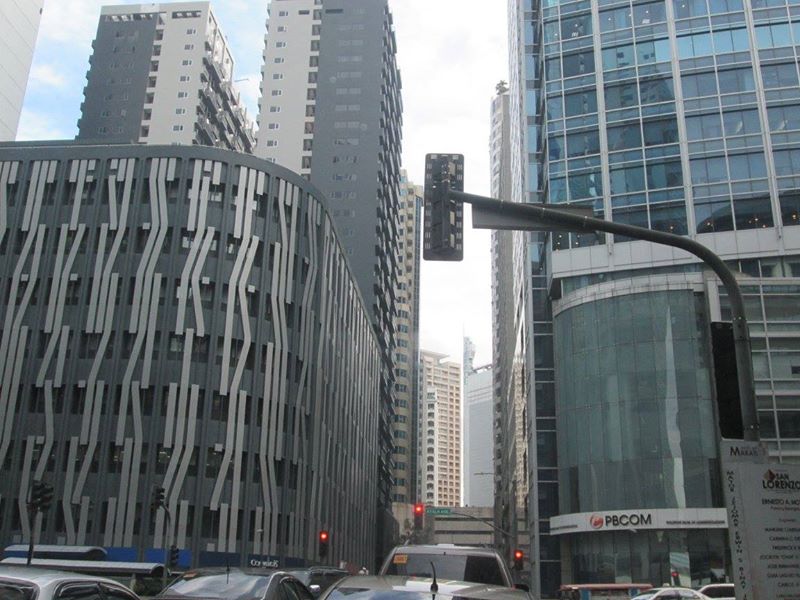
Metro Manila Appraisal

It was an honor and privilege to be invited by a prestigious and one of the top appraisers company in the land to join their team in appraising property in Metro Manila.

Truly it adds value to my appraisal skills and in running an appraisal company.

Great experience.

2112022328_1062426873775554_2469452123420426286_o 11221862_1062426540442254_1175843060924474763_o  12017663_1062427097108865_7014141333815468603_o 12017729_1062426737108901_1636065483479174809_o

Appraisal services with a government institution

Appraiser Gus Agosto has just rendered appraisal services to the University of the Philippines, Cebu Campus. “It is an honor to be awarded a contract and appraised properties of a prestigious institution like U.P.”, Appraiser Gus Agosto shared.

“Government institutions and agencies are good market for real estate appraisers. Appraisers can explore and participate in government bidding and contracts.” he further said.  Last year, he was also part of an appraisal team that provided appraisal services to the Cebu Appraisal Technical Committee on Zonal Valuation of the Bureau of Internal Revenue (BIR).

To succeed, Appraisers should have working knowledge of the Republic Act 9184 or the Government Procurement Act. Every branch or agency of the government through the head of a procurement entity forms a bids and awards committee (BAC) to conduct competitive and transparent purchases by means of public bidding. There are also alternative ways government can make purchases like limited source bidding, direct contracting, negotiated procurement and shopping,

“In winning a government contract, offering the lowest price is not the key. It is knowledge, appraisal experience and excellence in appraisal that matters,” Appraiser Gus ended.

upcebu3

New Cebu South Board Officers Take Oath of Office

In a ceremony that was both solemn and celebratory,the new officers of Cebu South Real Estate Board (CESOREB) took their oath of office vowing to hold inviolate the high ethics of the profession. The New Officers were sworn in by Reynaldo Lim, President of Philippine Association of Real Estate Brokers (PAREB).

The National Directorate of PAREB, officers of other Visayas Local Boards and fellow real estate brokers congratulated the new officers. “The event is a significant one, it signals the birth of new officers that are willing to serve their members and practitioners in general.” Gus Agosto, the New President of Cebu South Board, said.

In his remark, National President Rey Lim, shared the programs of PAREB and the new opportunities for the members. Local board presidents of Iloilo, Mactan, Bohol and Cebu took turns in sharing their board plans and programs.

The Oath-taking Ceremony was held on March 6,2015 at St. Mark Hotel, Cebu City.

aa

Appraisal 101: How an appraisal is done

It has been a normal scene for prospective client and practitioners to ask an appraiser for the value of a certain property. Some people also thought that after site inspection, an appraiser can render a value opinion already. So, there is a need to answer questions on how an appraisal is done? And why it is important to follow the process?

Appraisal may seem as a simple and fast process. An appraiser shows up at a property for a short time with a camera and tape measure and that’s it. However, the property inspections are only a part of a big process. A typical appraisal report requires 12 to 13 combined hours by appraiser and staff to complete.

Ordering an Appraisal
The process usually begins when a client call or visit the appraiser to order an appraisal. In the telephone or in-person conversation, the appraiser will asks data of the property such as title, building plan, tax declaration, as well as preliminary information of the client, and agree on the scope of work and professional fee. The most important is scheduling of the site inspection.

Identifying the Property
In preparation for the site inspection, the appraiser will study the documents provided by the client focusing on the location, shape and size of the lot, design of the house and decide on what valuation approach that he will use. Additional research will be done in different government offices for the identification of the property.

The Site Visit
Then the appraiser conducts a careful physical inspection of the property and the neighborhood. Take photographs and verify area measurements. Don’t worry about the kids, toys or household disorder. The appraiser is looking at the structure, condition and features of your home.

The appraiser will also roam the neighborhood to observe, estimate the distance between known landmarks in the area. Also, to look for any factors and characteristics that may affect the value of the property, and searching for comparable properties or “comps”. In the language of appraisal, ‘comps’ are sales and listings available in the market.

Pulling It All Together
Next, the appraiser performs in depth analysis of all of the available data. Returning to office is crucial part of the appraisal process. The appraiser will gather all the information about the properties and the financial aspects. Make phone calls to agents, government offices and other parties involved in the transactions to confirm observations or to gather more information. Examine the title and tax declaration for any encumbrance, annotation and non-compliance with the law. Often, property information from several sources is in conflict and it is the appraiser’s task to determine the true state of affairs by means of research, experience and good judgment.

Guided by the principles of appraisal, he will analyze the neighborhood, market, zoning, the predominant use of the area and determine the highest and best use of the property, as vacant and as improved.

In using market data approach, the appraiser will select at least three comps, but generally four or five are necessary to support the basis for the final appraised value. The appraiser makes adjustments to reflect differences in comp properties. Upgrades like painting, chandelier, air conditioners, recent redecorating, or home improvements may add value to a property.

There are other approaches or methods in valuing properties. Every approach is made to substantiate the appraiser’s opinion of market value.

Finalization of a Report
The last part is the preparation and printing of a detailed report, outlining the value of the property appraised and the approaches to value with several addenda including copies of title and neighborhood maps as well as photographs of the property.

The completed appraisal is packaged and transmitted to the client—the property owner, lawyer or company representative who ordered the appraisal.

Thus, appraisal is not a mere “opinion of value”, it follow process and guidelines set by authorities and international standards. Following thoughtful and thorough procedures will provide a complete and credible appraisal.

Challenges In Appraising Warehouse Properties

Appraisal of a warehouse can appear straightforward compared to other appraisal assignments. A warehouse appraisal involves comparing a building that is primarily an open shell to similar buildings. Some appraisers tend to assume that one “box” is pretty much the same as another. However, a number of warehouse characteristics can present challenges during the valuation process.

Some appraisers end in using Cost Approach method as a generic method in appraising buildings. But there are several critical differences appraisers need to keep in mind. First, knowing the remaining economic life of a structure is a big factor in determining what method should be used. Appraising old structures using the cost approach method may generate an incorrect result. Income approach is the reasonable method in this situation. Second, the importance of solving the question of the highest and best use of the property- as vacant and as improved, gains ground when the subject property is old and located in a neighborhood where other best use is possible and more feasible.

In appraising these warehouses using Income Approach, it is essential to carefully consider the following factors in selecting comparables:

• Excess land
• Truss height
• Percent of office space
• Loading facilities
• Truck maneuvering distance
• Floor thickness/loading capacity
• Power service
• Land-to-building ratio
• Size relative to typical building size

The most important, location-related factors can differentiate warehouses located within the same community. The value of a warehouse facility is tied to the ability to move goods efficiently in and out of the warehouse. Any inefficiency reduces profitability.

In a challenging profession, an appraiser should think “out of the box” in looking methods that will result in a reliable and unbiased opinion of value.

What they say on Appraiser Gus?

Let our clients and peers speak.

Gus Agosto has been perceptive enough to have realized the potential conflicts of interests with regards to meeting the sellers and has been able to navigate and maneuvered satisfactorily around it, and still come out with a justifiable figure that satisfies both parties.

Of course I would recommend him to others as he has performed what was expected of him and more.”

Richard Azares
Managing Broker
DiamondCrest Real Estate Services

“Gus Agosto is highly competent and much more knowing him in the high level of ethical standard and practice. He is knowledgeable and trustworthy in his assigned work.

We were doing the appraisal business together and yes Gus Agosto is commendable.”

Tom Academia
President
Magaca Appraisal & Konsult

“As a fellow appraiser, I can say that Gus is professional and considerate to his colleagues suggestions and opinions.
He is much updated with information and current events that could have an impact on the real estate industry especially the appraisal service.

Yes, I recommend him, because one does not only get an appraiser that can present you the technical aspect of the property but also a broker that knows the marketing conditions of a given location.”

Germaine Ouano
Managing Partner
Intech Property Appraisal, Inc.

“Gus is a new breed of appraiser that can be relied on the opinion of valuation. He is very active practicing appraiser/ someday a lecturer on the update of the Real Estate Profession and economic trend in the Philippines and ASEAN.”

Oscar Labrador
Founder
Cebu Appraisers

Newly Appointed Court Commissioner

On December 12, Thursday, at 8:30 in the morning a simple oath taking of the Commission took place at the office of Judge Victor Teves, Lapulapu City Regional Trial Court Branch. The Commission was created to determine the fair market value of a property under litigation.

“It is an honor to be part of a body that commissioned by the court and will help in settling dispute”, Gus said after the oath taking.

Dr. Tom Academia , PARCS Executive Vice President said, “Appraiser as commissioned by the court must understand that his principal is the court, not in any of the parties involved and importantly, that position is always unbias in the performance of his appraisal duty. “

Gus is not new to appraisal involving legal proceedings.” I appraised properties already for litigation support”, he said. I helped clients and lawyers in strengthening their legal defense and arguments in court.

Gus was formerly the Managing Partner of Intech Property Appraisal,Inc., a Manila based appraisal company. He appraised different properties-residential, commercial and industrial, in Cebu and Iloilo. He also appraised properties of Cebu CFI Community Cooperative in the Visayas and Mindanao.

A licensed real estate appraiser and broker, he graduated Bachelor of Arts, Major in Economics. He also earned units in Bachelor of Law. Recently, he completed the Real Estate Consultants Review and Seminar given by the Philippine Association of Realty Consultants and Specialists (PARCS).

He is currently the President of Cebu South Real Estate Board, a local board under PAREB or Philippine Association of Real Estate Board.

Highest and Best Use

It Is important for a real estate practitioner to know not only the current market value of the land they are marketing or dealing with. It is also equally important to determine its highest and best use. The highest and best use of a specific parcel of land is not determined through subjective analysis by a property owner, developer, real estate agent, or appraiser; but rather, it is a use shaped by the competitive forces within the market where the property is located.

In a real sense, the definition of highest and best use encompasses four tests. It is …
• the most probable use of land or improved property that is legally possible, physically possible, financially feasible (and appropriately supportable) from the market, and which results in maximum profitability.

An attempted analysis of highest and best use involves two considerations: [1] the most likely and profitable use of the site “as if vacant” under the requirements set forth above and, [2] if a property is “already improved”, it is the use that should be made of the property to maximize value for non-income producing properties or, maximize net operating income on a long range basis for investment properties. In cases where capital expenditure is necessary to renovate or improve an income producing property, these costs must provide a sufficient rate of return (to the owner) for the total amount invested in the site and building improvements.

Basic highest and best use assumptions include:

• If the property is located in an area “zoned” for commercial use, the maximum productivity of the land as though vacant will likely be based on commercial use. If, however, the competitive level of demand is greater for say, residential or multi-family use, then the highest and best use of the property as improved would be for residential use. If market preference conflicts with zoning (and consequently violates the legal permissibility test), a developer will consider if there is sufficient profit incentive to justify the added legal costs, extended time frame, and potential neighborhood opposition before obtaining a zoning change and developing the site.

• As long as the value of the property “as improved” is greater than the value of the site as “if vacant”, the highest and best use is usually the “improved” property. Once the value of the vacant land exceeds the value of the improved property (including demolition costs), highest and best use will usually dictate that improvements be demolished.

The following are examples of narratives from appraisal reports outlining the primary criteria in estimating highest and best use…

LEGALLY PERMISSIBLE USE
• The present zoning classification of Highway Business encourages the use of the subject property for retail —clearly a definition consonant with the present use of the subject property and surrounding properties. Environmental conditions and urban infrastructure are adequate to support the present use and it’s current use appears to legally conform with the current zoning ordinance.

• The present lack of zoning would allow for a wide variety of residential and/or commercial/industrial uses. As vacant, the proposed improvements would be legally permissible subject to the same land use regulations that apply to all property types such as erosion control measures, environmental safety, watershed implementation, and government agencies compliance. There were no apparent adverse easements or encroachments which would adversely impact subject and there are no known private deed restrictions which would prohibit full utilization of the site.

• Lack of zoning in the county and no known restrictions concerning the property would permit virtually any use. Even though new zoning regulations may be imminent in the near future, it is probable that current use patterns (retail and offices – a supermarket, insurance office, restaurant, bank branch, convenience store, and so forth) would entail similar zoning.

PHYSICALLY POSSIBLE USE

• The vacant site is near level, highly visible from the highway, and is considered suitable for “low rise” improvements. Although no soil report has been reviewed, it is the appraiser’s opinion that the soil has sufficient load bearing capacity to support construction. All public utilities are available at the street and capacity for utilities does not appear to be a limitation.

• If vacant, the site appears to be of sufficient size to accommodate many types of commercial buildings and parking requirements for those buildings. Likely uses would include office or retail. As improved, the existing retail building adapts well, still has significant remaining economic life, and therefore should not be demolished. On the other hand, the roof should be replaced and exterior painted to sustain the condition of the building.

• The subject site is mildly sloping at its most visible/usable portion. Improvements are possible but construction would be limited by the size, shape, and topography of the site as well as the ability of the vacant site to accommodate on-site well and septic placements. In January, 2002 hopes for a new sewer line to the area were diminished after local officials decided against building a sewer line through the valley. Instead, they elected to spend Php 1,500,000 for a small treatment sewage plant. Further, the recent construction of a nearby Food Lion Center in this rural location required construction of an on-site waste treatment facility that cost in excess of Php 500,000 and required the acquisition of four additional acres. These examples, and the prices paid for raw land, are reflective of the difficulty, additional development risk, and increased costs necessary to develop marginal sites for commercial use.

FEASIBLE AND MARKETABLE USES

• The current market value of the subject is driven by its current use. A general shortage of developable sites in this mountainous region has sustained land prices, encouraged development of marginal sites, and demolition of those buildings that no longer produce economic return. Case in point, rapid development along the Highway corridor. The advent of growth along the corridor has driven prices out of reach for most uses except those catering to brand name retailers, fast food/restaurant chains, and/or strip centers. Outdated buildings are being acquired and demolished to make way for more modern structures that can produce greater economic return.

• For the subject, it is fairly new and the cost to demolish would appear to make this property too costly as raw land. The location has high traffic volume – a requirement for retail use, but it has only marginal visibility (due to it’s elevation above the highway) and limited access – also requirements for retail. It’s present use as retail is constrained by the following: a lack of road frontage, excessive above-the-road elevation, small site size, and poor access – factors that would likely discourage brand retailers from acquiring the site if vacant. Although access may be cured at some cost, the elevation of the site, limited visibility, and blocked signage cannot be financially overcome. Market data suggests office and “secondary” retail pricing are competitive. Given these limitations, probable uses would include: [1] the continued retail use or, conversion to office use if conversion costs can be sufficiently amortized.

• The property is presently improved with a one-story 2000 sq. m. branch bank facility. The structure is reasonably well designed and in good condition however, it does not have the modern appearance of more recently constructed facilities. On the other hand, there are no other branch bank facilities in this section of the City and the present use as a branch bank is felt to command a competitive advantage due to the lack of competition of other banks in the market. Further, it is the appraiser’s opinion that use of this location for this purpose may command a premium in the market.


Why Do You Need a Real Estate Appraisal?

Anytime you buy or sell real estate, you need a property appraisal. The primary purpose is to find out exactly how much your property is worth. Banks and similar lending companies also require it, before a buyer can obtain a mortgage.

An appraisal develops an “educated and trained opinion” on the value of the property. It also, in some circumstances, may ascertain the best use of the property, garnering the best selling price. For example, a long-time residential property may be in an area that has been rezoned for limited commerce, which could potentially bring in a higher sales price than marketing the real estate to potential residential buyers.

An appraiser differs from an inspector, who is looking for things that need to be corrected, repaired or replaced — things that are required by law to be completed before the property can be sold or to enhance your sale price. Though an appraiser will look at these same things, he/she is only interested in developing the value of the property.

A real estate appraisal is based on the highest and best use of real property — what use of the property will produce the highest possible value? The final appraisal must be both profitable and probable.

The real estate appraisal includes a definition of the type of value that is being developed — whether it is a market value (what most sellers need), a condemnation value, quick sale value, and so on.

The Process
The appraiser looks at each property individually, beginning with an objective inspection of the interior and exterior of the home or building, as well as driving through the surrounding neighborhood. The appraiser looks for the assets, as well as the detriments, of the property. For homes, gross living space, quality of construction, location, layout, the number of bedrooms and bathrooms, the lot size, condition of the home and land, central air conditioning, landscaping, number of fireplaces or the lack thereof, decks, pool, fencing, recent renovations, amenities provided by the surrounding neighborhood, and crime statistics of the area are all considered by the real estate appraiser.

Living space is calculated by measuring the outside of the home. It does not include such areas as the garage, porches, sheds, and so on. Basements are generally calculated separately from the living space. The contributory value of basements is determined by the local market, government regulation, if it is finished or not (and the quality of the finish), and so on.

The real estate appraiser usually only considers permanent buildings within his/her appraisal. Fixtures that can be relocated, such as above ground pools and sheds, are not included in the appraisal.
If you are the real estate seller, you should point out any features, amenities or improvements of your home that are not readily discernable.

Next, the real estate appraiser analyzes the available market data for your area and the surrounding neighborhood, including current and historical comparable sales, current offers for comparable homes, pending sales, and proposed improvements. The appraiser gathers data from a variety of sources, as well as his/her own personal knowledge of the local market. The appraiser then compares your real estate to the broader market.
Each real estate appraiser has his/her own process of analyzing, collecting and reconciling the needed appraisal data. If you get five different appraisals for your real estate, you may receive five different appraisal opinions. They should, however, all be within a similar value range, if they are completed within the same timeframe and under the same conditions.

Though the real estate appraisal is not for public consumption, it may be shared with all parties concerned. For instance, a buyer has offered $150,000 for a home, but the buyer-side, commissioned appraisal value is only $146,000. Sharing this appraisal with the seller means that the owner can do needed improvements to bring the price up or offer the real estate to the buyer for the appraisal amount.

For the highest appraisal possible, property sellers should have an inspection and appraisal done before putting the property on the market. First, the inspection in order to make any needed repairs or renovations. Then, get the appraisal to ensure you are getting the most for your real property.

John Harris is an expert researcher and writer on real estate topics such as economics, credit improvement tips, home selling advice and home buying preparations.