
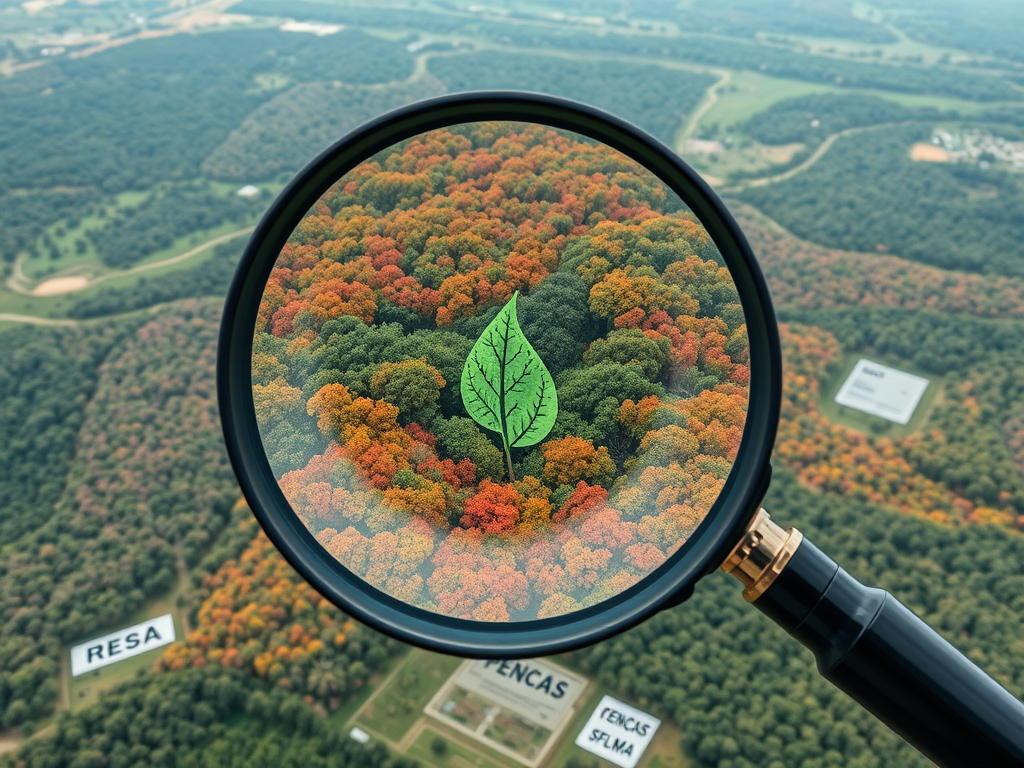
The real estate landscape in the Philippines is evolving. Value today is no longer measured only in square meters or location premiums—it now includes environmental quality, ecosystem services, and sustainability performance.
This shift is driven by two landmark developments:
- the Philippine Ecosystem and Natural Capital Accounting System Act (PENCAS, RA 11995), and
- the Sustainable Forest Land Management Agreement (SFLMA) recently launched by the Department of Environment and Natural Resources (DENR).
Together, they introduce a new economic reality: natural capital has measurable influence on land value. And while the RESA (RA 9646) confines appraisers to the valuation of real property, it also empowers them to consider external factors—economic, social, and environmental—that materially affect value.
From Real Property to Environmental Influence
Section 3(g) of the RESA Law defines appraisal as the act of estimating the value of real property as of a given date and for a specific purpose. This legal limitation means appraisers do not value ecosystems directly—but rather, the way ecosystems and environmental conditions affect real property value.
That connection is best understood through the concept of external obsolescence or external influence to value.
External Obsolescence as the Link
In appraisal theory, external obsolescence (also known as economic or locational obsolescence) refers to:
“A loss—or sometimes a gain—in property value caused by factors outside the property boundaries.”
Environmental and ecological conditions perfectly fit this definition. They are external to the parcel but have a direct market effect on it.
Examples include:
- flooding, erosion, or landslides (negative externality);
- improved forest cover or mangrove restoration (positive externality);
- new zoning restrictions under PENCAS-based environmental plans (neutral or negative, depending on use); and
- inclusion in SFLMA eco-management zones (potentially positive due to tenure and investment security).
Thus, the appraiser’s function under RESA remains squarely focused on real property, but one that fully recognizes environmental influences on value.
The Role of PENCAS and SFLMA
PENCAS (RA 11995)
Institutionalizes natural capital accounting nationwide. The PSA, DENR, and NEDA are mandated to compile data on land cover, ecosystem services, resource depletion, and environmental quality.
For appraisers, this means access to measurable environmental indicators that can be analyzed as external influences—for example, changes in flood risk, air quality, or land productivity affecting market behavior.
SFLMA (DENR DAO 2025-22)
Streamlines forest tenure instruments (IFMA, SIFMA, CBFMA, SLUP, etc.) into a single long-term, renewable agreement. It formalizes forest-land rights for sustainable and multi-use purposes—such as agroforestry, eco-tourism, and carbon sequestration.
Under this system, the appraiser values the real property interest—leasehold, usufruct, or management rights—not the forest resource itself. But the environmental context of SFLMA areas (restored ecosystems, carbon-credit potential, reduced hazard exposure) can enhance or diminish land value, thus affecting appraisal outcomes.
Environmental Influence and Valuation Practice
| Environmental Condition | Valuation Treatment | Effect on Value |
| Mangrove degradation or deforestation | External obsolescence (negative externality) | Decrease due to higher flood risk |
| Mangrove or forest restoration project | External influence (positive) | Increase due to improved safety and amenities |
| Designation as protected zone or watershed | Legal restriction (external factor) | Limits Highest and Best Use; may reduce market value |
| Forest tenure via SFLMA | Institutional improvement | Enhances value through investment and tenure security |
Here, PENCAS data quantifies what was once only qualitative: land condition, ecological function, and exposure to climate risk.
These data can now be used as objective evidence for adjustments related to environmental obsolescence or enhancement—making appraisal analyses more defensible, especially in litigation, taxation, or policy work.
Anchored on Standards
Both Philippine Valuation Standards (PVS 105) and International Valuation Standards (IVS 105) explicitly require appraisers to consider:
“All external factors—economic, social, and environmental—that materially affect value.”
Therefore, recognizing environmental obsolescence or benefit is not optional; it is part of the appraiser’s professional duty of care.
This aligns seamlessly with the PENCAS mandate to integrate natural capital information in economic planning, and with the SFLMA’s goal to attach measurable economic value to forest stewardship.
Professional and Legal Integration
| Legal/Policy Framework | How It Affects Appraisal |
| RESA (RA 9646) | Defines scope as real property but allows inclusion of external (environmental) influences to value |
| PENCAS (RA 11995) | Provides ecosystem and natural-capital data relevant to external obsolescence analysis |
| SFLMA (DAO 2025-22) | Creates new forms of real property interests (management rights, eco-tenure) subject to valuation |
| PVS/IVS Standards | Mandate consideration of environmental, legal, and economic factors in market analysis |
| RA 7160 / RA 8974 | Require fair valuation for taxation and just compensation, both affected by environmental quality |
Real Property and Environmental Responsibility
While the RESA limits the appraiser’s work to real property, it does not prohibit analyzing external environmental influences that shape that property’s market perception.
In today’s world, ecological quality is not merely context—it is economic reality. Flood resilience, forest conservation, and clean water access are all capitalized into property prices.
Thus, the appraiser’s task remains the same:
to estimate the value of real property—
but with a more comprehensive understanding of what drives that value.
The environmental-economic dimension of valuation is not beyond RESA’s mandate; it is embodied within its principles.
PENCAS and SFLMA do not redefine the appraiser’s jurisdiction—they deepen it by quantifying the external factors that have always influenced value.
When an appraiser measures depreciation due to flood risk, or premium due to green infrastructure, they are not performing ecological valuation. They are performing sound, modern real property appraisal that recognizes external obsolescence and environmental influence as integral forces of the market.
In short:
We still value land—but now, we value it with eyes open to the living systems that sustain it.












 Real Appraisal